Kelli Richards
November 1, 2012
 Ah Myspace, the website that brought social networking and social media into the homes of the masses. Once the king of the internet, valued at $12 billion and becoming the most visited website in the world, it has since been dethroned and fallen from grace. Or has it? It was recently purchased by Specific Media and Justin Timberlake in June 2011 for $35 million with hopes of breathing new life into the company. But will they be able to reclaim the throne in a much more crowded kingdom? The answer to that remains to be scene but based on the preview it looks like something worth getting excited about.
The obvious issue is that there are already enough, if not too many, social networks for the average user. Between Facebook, Twitter, Tumblr, Instagram, Youtube, Google+ and the many others, the internet has become inundated with social media. Billed as a way to connect artists and fans, the MySpace team at Specific media has taken a smart approach by letting users integrate their Facebook and Twitter accounts rather than having to create a new one. With celebrities and artists already connecting with fans via Twitter, Facebook, and Instagram perhaps integration and consolidating is something we need more of.
Seamless integration and creative design are two big things the new Myspace has going for it. Based on the preview video posted by Justin Timberlake, the website does look gorgeous and functional; 2 issues which plagued it in the past. Perhaps the biggest thing it has going for it is the music feature, which is something it actually always did exceptionally well.
Once a great way for big names and local bands alike to post songs, event info, pictures, etc, it will now let users create and share playlists, listen to whole albums, discover new music based on recommendations, and more. A cool feature for the artists is an analytics page which provides demographic breakdowns of their audiences by age, gender, region, etc. Myspace currently boasts one of the largest music catalogues on the internet, albeit from mostly unknown artists, at 42 million songs. If they can get some big artists and labels on board or even integrate with other services like Spotify, Pandora, Rdio, or Rhapsody then it could very well come back to life.
There’s still a lot that is up in the air for the new Myspace but if it can find a way to get over the hump, play nicely with the other social networks, and deliver great content then I think it will be a success. If it can’t create a pleasant, clutter-free, and unique experience for the user then it may be time to just let it die out.
Kelli Richards, President and CEO
The All Access Group, LLC


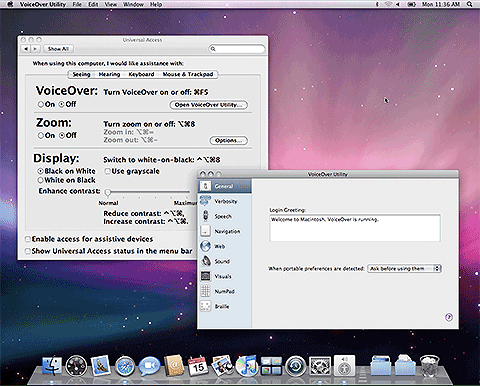 The special needs community is rarely the target demographic for the tech industry. Many of the wonderful new gizmos and gadgets that come out simply aren’t designed for them. There are an increasing number of companies that are developing products and technology to make computers and mobile devices more accessible for the special needs community, however – and one of those companies happens to be Apple, Inc.
  iTunes may be one of the best products that Apple ever developed, or at the very least, one of the smartest. Just a few weeks ago Apple released iTunes 11 with a myriad of visual and technical changes and improvements. iTunes will turn 12 years old in January, and in those years Apple has found a way to streamline, connect, condense, and centralize a user’s content and multimedia experience. With that in mind, I think it’s worth looking at a few of the existing features, the new ones in iTunes 11, and the future ones planned for next year to see just how they’ll continue to do that.
 Are you one of those people who think they can’t play music or will never learn to play an instrument? I have heard people say things like “I’m too old now” or “I’m just not musically gifted.” Thanks to the great products from Beamz Interactive, you’ll never be able to use those excuses again. Beamz has created a great new interactive music system that uses lasers to enable users to create music. And I cannot think of a better stocking stuffer for anyone in your life….think DJ’s, musicians, educators, music lovers, kids – anybody. This is one of the most inventive, original products of this decade.
 The holiday season is upon us now that Thanksgiving has come and gone. If you’ve just surfaced from the post-Thanksgiving turkey overdose then you’ve already missed Black Friday, which is probably for the better. However, many e-commerce sites are extending Cyber Monday deals through the entire week. This blog isn’t going to tell you where to find the best deals or give you any general tips, but rather it will highlight the importance of Cyber Monday to the tech industry and its influence throughout the globe.
 I’d like to think that we all have heroes, that everyone out there, no matter how successful they are, takes the time to have someone to look up to and admire. John Lennon was always that hero to me. He lived by his own rules and made a mark that only grows stronger over time. A few years ago, I was lucky enough to meet his oldest son, Julian, and to share a deeply moving conversation about his dad and the work that he did – and to discuss the work that Julian has created through his charity, The White Feather Foundation.