Kelli Richards
May 19, 2021
Over the past year, since the pandemic and subsequent shut-downs have up-ended our world, there have been many things to worry about (legitimately). That said worrying is most often a complete waste of time and energy. It doesn’t solve the issues we’re faced with. Clear thinking and focused action solve problems. Worry and anxiety simply mask our thinking (like a Band-Aid) and drain us of vital energy when we could be applying our minds towards tangible solutions. Here are a few tips to support you in reducing your worries and embracing your life.
Take a Closer Look
The next time anxiety strikes and you feel overwhelmed or paralyzed, the best thing to do is to slow down and pause to stop the monkey mind that goes on in your brain. With just a brief break in the action and a deep breath, you can regain your composure, reflect on the situation objectively, and identify possible options to address it. You can reach out for support from trusted others around you as desired to provide you with much-needed perspective and insights.
From there, map out your worry about the situation in detail—and jot down at least three alternate courses of action you could take to address it. Options demonstrate there are several ways you can look at what’s going on, that you have choices, they can support your confidence, and provide you with the realization that you have more control over the situation than you first thought. It’s all about how you react.
By giving yourself a temporary pause, writing down and reflecting on the cause of your anxiety, you gain emotional distance. From there you can more objectively evaluate your options and which one feels like the best course of action in the moment. The more action you take, the more your worries fade away and the better your feel.
Accept the Worst-Case Scenario
When you break down your fears and get to the essence of what’s creating your anxiety, you come to the worst-case scenario around a given situation. At that point, you can see whether you could accept that scenario (the answer is usually yes if you get creative with options), and you can also evaluate objectively the likelihood of that worst-case outcome really taking place. Most often the reality is that it won’t happen, and if it did, that you’d be equipped to handle it.
For example, let’s say that you or your spouse gets laid off from your job unexpectedly. That’s a big fear that many people have! Typically either you have some emergency savings set aside in a rainy day fund and/or you’ll have some form of severance (and unemployment pay) and/or one of you is still bringing in an income.
Reducing your spending while the person out of work seeks a new job is often quite helpful—and you find that you may have been overspending on things that you didn’t really need to, which in itself can lead to better habits moving forward. You probably wouldn’t lose your house, and if you did then what? You may be able to move in with family or friends temporarily (or rent a place) until you got back on your feet financially. Would these be challenging options to have to deal with? Yes, but you would survive what undoubtedly would be a reasonably temporary situation. If you had to start over you could.
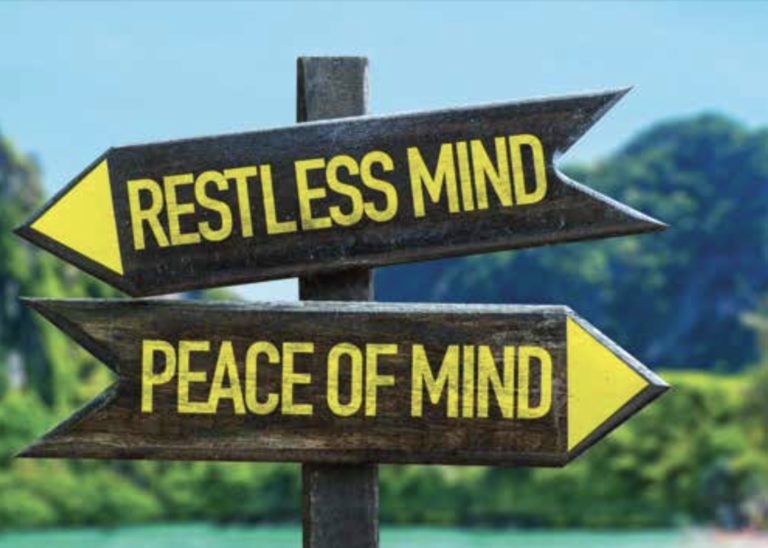
Knowing that you could survive your worst-case scenario provides you with a sense of calm, confidence, and peace of mind allowing you to take action and forge ahead.
Contain And Address Your Concerns
The best way to address your concerns (assuming they are valid versus your mind running amok) is to take focused action to move through them. When you can compartmentalize the situation at hand that’s got you in its grip, you can take the actions that are yours to take—and then get on with the rest of your life. Whatever’s causing the anxiety doesn’t need to paralyze you and your whole world as long as you’re taking productive steps toward resolving your concerns.
Again, this is where having a great support system and people in your inner circle that you can talk through options with can be instrumental in helping you get through trying times and unexpected challenges. They can support you emotionally and mentally to re-frame your reality, provide perspective, and often come up with creative options and solutions you may not have thought of in the heat of the moment when you’re too close to the situation at hand.
You’ve Got This
When something shakes up your world, give yourself the gift of a “time out” to pause, reflect and address the situation with calm, objectivity and support. That in itself should provide some much-needed relief. Keep breathing and keep the faith. When you trust yourself and come from a position of agency and composure knowing you can take care of virtually any situation (and manage your anxiety when it arises), you can often right the ship by identifying solutions and specific actions you can take to handle whatever is going on in your life. Remember that when you take care of today, tomorrow takes care of itself. No matter what, you’ve got this!






 Two years ago, I was attending a gathering of my advanced coaching graduate alum with our mentor, Alan Cohen, in Hawaii. Alan often invites colleagues of his to join us via Skype as guest contributors. That year, he invited Ken Honda from Japan who had been a successful entrepreneur in Japan — and then went on to be one of the best-selling authors in Japan (selling over 7 million copies of his books worldwide.) I resonated with Ken’s style, demeanor, approach and message immediately. He told us about a book he was working on called “
 One of my business mentors is
  In the past six weeks, we’ve experienced unprecedented disasters of scale — some delivered by nature in the form of the big hurricanes affecting Texas and Florida, and the major fires in Napa and Sonoma counties; and some by man as was the case with the music festival massacre in Las Vegas. While these disasters wreak havoc and change lives in untold ways, how we react to them when they’re going on makes a huge difference in how we (literally) weather the storm, and in the recovery once we’re on the other side. It makes good sense to reflect on lessons learned before, during and after these disasters. Here are a few ideas to share: …