Op Ed by Kelli Richards


As a ’super-connector,’ I know a lot of people and have made a lot of friends over time through various jobs and communities I’ve been a part of — like many of us have. For years (even decades) I was pretty good at keeping in touch with most of them. However as time has passed (I’d say over the past ten years in particular), I’ve drifted away from many people who I really care about. It’s not something that I’m proud of, and I’ve made a vow to close the gap and re-sync with more of my people.
I’ve realized that when someone crosses my mind, it’s important to reach out and let them know I’m thinking of them. Inevitably it means so much to them, and though time may have passed, the depth of the relationships we’ve forged remains and we pick up as if there have been no gaps. I’ve found this to hold true both for friendships and for business relationships.
I was sitting in my favorite coffee shop not long ago, and when I looked up I saw one of my favorite Apple Alum – Peter Hoddie – who was one of the original engineers that developed QuickTime technology. We had an unexpected catch-up on the spot which was really delightful. I hadn’t seen him in years but as referenced above, it was as if no time had passed.
More recently, I flew to San Diego for a celebration of life of a dear friend who passed unexpectedly last fall. One of my close friends from my year of doing graduate coaching training with Alan Cohen, Montie Sommers, lives in San Diego so I took the opportunity to see if she was available for brunch. We had a fantastic visit that lasted a couple of hours and really lit me up.
So I guess the moral of this story is, do your best to stay in touch with your friends and colleagues; we all need people in our lives who know us, our history, who care about us – and who we care about in return. Life is short, and it’s important to retain those ties and not to let time and other distractions carry us too far apart for too long. Consider reaching out to folks who are meaningful to you when you think of them and not putting that off; that’s a great way to stay actively engaged.
I’m curious if you have ways you like to keep your friends and community close to keep those ties intact; let me know!
Be well,
Kelli
Having a garden sanctuary in your environment is more than just a luxury; it’s a soul-nourishing necessity in our fast-paced, digitally driven world. In this article, I share why creating and maintaining such a space is really essential for your well-being, creativity and alignment as a visionary innovator and leader.
 I was recently interviewed by host Debra Morrison for this podcast. The community is focused on empowering women over 50, and it pivots around the notion that it’s never too late for women to reinvent themselves and to create impact. Our discussion centered on my journey and insights around innovation and reinvention throughout your life and career.
 I recently watched Cathie Woods of ARK Invest do a talk on trends in innovation that are important for investors to pay attention to. Cathie is a top stock picker and founder of the $60B ARK Invest which over the years has made phenomenal returns on her investments in cutting-edge technologies. She and her team have just come out with their “Big Ideas 2025” report which is a deep-dive guide to breakthrough technologies poised to boost productivity dramatically, to revolutionize industries, and to create long-term investment opportunities. It’s a must-read report that centers on transformative change.
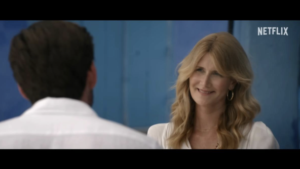
One Friday night recently, I was home alone and didn’t have a clear idea of what I wanted to watch when I came across a Netflix film entitled “Lonely Planet” starting Laura Dern – I always enjoy her films. I enjoy romcoms, especially after a long work week, and as a lightweight film this looked like it would fit the bill for the evening. The film centers on a restless, somewhat reclusive novelist who attends a writer’s retreat in Morocco designed to gather together a host of prestigious authors. She runs into a younger man while at the retreat (Liam Hemsworth) — and what starts off quite casually turns into a love affair. I enjoyed it more than I thought I would, and would definitely recommend it if this type of movie is what you’re after.
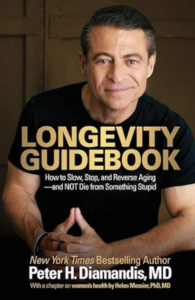 Peter Diamandis is an entrepreneur, futurist and a doctor. He’s perhaps best known for being the co-founder and executive chairman of Singularity University, and the founder and chairman of the XPRIZE Foundation. I’m a big fan of his insights.
In this, his latest book, he shares insights on cutting edge technologies, therapies and trends that can allow us to live healthier, longer lives. It’s a book designed to inspire you to optimize and maintain your best health to take best advantage of the transformative breakthroughs taking place rapidly in the science and medical fields. He maintains that over 70% of your potential longevity is based on your lifestyle, not your genetics, and is therefore within your control. He goes into great detail about his own health regimen and protocol, sharing his diet and exercise routines, including the 75+ pills he takes daily.
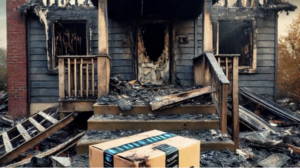
Companies delivering packages or mail to homeowners impacted by the loss of their homes due to fire or other disasters need to instruct drivers to be mindful and sensitive enough not to leave anything when there’s no house. In this article, I share some practical tips that both delivery services and homeowners can take to better manage this type of scenario.
“I’ve had the pleasure of working with Kelli – and her refreshing candor and genuine desire to help others grow and reach their full potential truly set her apart from anyone else that I’ve worked with. Kelli tells it like it is and pushes you out of your comfort zone to think differently…even when it doesn’t come naturally.
One of her most valuable assets is her extensive network, which is a testament to the respect and trust she has earned over the years. She is remarkably well-connected, and she leverages these connections to open doors and create opportunities where others may not see them. I found the conversations that she facilitated with her contacts to be transformative in terms of how I began thinking about the next phase of my career.
Most importantly, I see Kelli as more than just an advisor. She’s a catalyst for change and that voice of encouragement in your mind to give you the confidence you need to reach higher than you thought you could before. During my work with Kelli, I felt like I had a true friend and a thought partner by my side helping me raise my game. If you’re looking to elevate your thinking, see new possibilities, re-imagine your capability and grow your network, then partnering with Kelli is truly one of the best decisions you can make. I look forward to continuing to work with her and to referring her to others who can benefit too.”
— Adam Harter
CMO, LIV Golf and Former SVP of Media, Sports & Entertainment, Pepsi
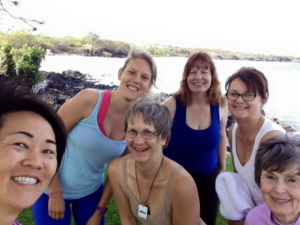
Me after a yoga class on the beach in Hawaii at a retreat – including my friend Montie (brunette on the right with glasses). In fact, Montie led the class – she’s a yoga instructor.
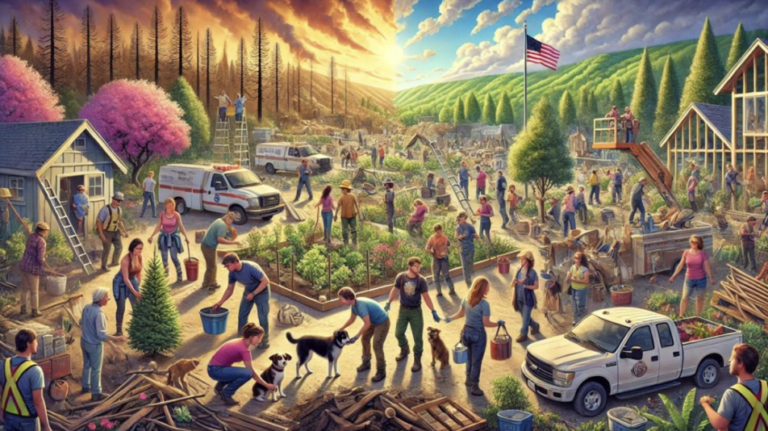
Just a couple of weeks ago, several regions of Southern California were hit hard by raging wildfires that came on very suddenly, as a result of 100 mph Santa Ana winds, and two of them in particular – the Palisades fire and the Eaton fire – wiped out whole towns swiftly and completely. The damage spanned over 50,000 acres, and thousands of homes and memories were lost in an instant – displacing many thousands of people and animals.
Many of my friends and colleagues were among those who lost everything and it’s soul-crushing. It’s hard to imagine the devastation and the impact on those affected, but while it will take time and a lot of support, these people will get on with their lives. We’ve had these types of fires in Northern California over the past several years with similar experiences (and the Lahaina fire in Maui!) so we’ve witnessed this before. Situations like this are where humanity is tested; one thing I know for sure is that we are nothing if not resilient.
On a smaller scale more personally, two of the closest people to me in my inner circle are getting ready to move to other states — and this will be a real test of my own resilience. I know we’ll remain tight, but I won’t be able to see them as often and this will most certainly be a challenge for me.
I also had a scary incident during the Holidays, where a trusted vendor who has been managing my website hosting and back-end maintenance for the past several years suddenly just disappeared without a trace. My site, which is a cornerstone of my business, was down for a week as a result (thank goodness restored by the heroic efforts of my business coach who had the chops) — and it was unnerving not to be able to reach the vendor who vanished. I still have no idea what happened to her, but I’ve since found a terrific resource to replace her, and all is well for the moment. That episode required resilience for me to get through a nail-biting experience.
The only thing we can count on in life is change — and sometimes there are hidden gifts we can’t see until we’re on the other side. In the case of my IT support, my new team is already adding so much more value.
What are some examples in your life where resilience allowed you to prevail in challenging circumstances? I’d love to hear about them.
Be well,
Kelli
In the wake of the recent devastating and catastrophic Palisades and Eaton wildfires in Los Angeles (similar to those we’ve suffered through in Northern California and in Lahaina, Maui), our hearts go out to the many individuals and families who have lost their homes, belongings, their lifestyles and their sense of security. Disasters like these leave a profound impact, not only on the victims but also on the broader community. Here are some ways we can lend a hand. Remember, help is needed long after it’s no longer front page news!
If you’re seeing this on THURS Jan 30th, today is also the day of the FireAid Benefit Concert to support LA fire victims featuring many of the biggest artists in the business — all lending their time and talent to the cause.
Read the Article
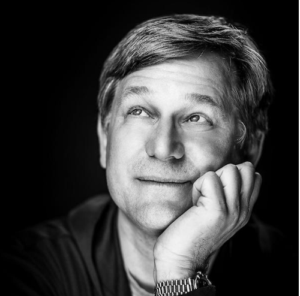 I’ve been in touch with several of my friends and colleagues in LA in the wake of the recent fires. My friend Stewart Copeland (best known perhaps as the drummer of The Police) tells me his family home and studio were spared; the fire was held back to within 700 yards of their property!
And here’s a really meaningful post shared on Facebook by another long-time colleague in media and tech, Rob Tercek (photo on the left), who resides in the hills above Hollywood. Here’s what he had to share:
“Today I dealt with some tasks I’ve been avoiding. Sweeping up the dust that has settled on every surface, and writing a big check for property taxes. Death and taxes. Sweeping the floor after a wildfire offers a silent moment of meditation about impermanence, fragility and human vanity.
There is dust everywhere. The dust comes from ashes that fell like snow from the sky last week But these big fluffy white snowflakes are different from mountain snow, because they instantly turn to black tarry ash when they land on a flat surface. The decks and patios are filthy with grime. My grand piano usually gleams with a deep black sheen. Today it’s coated with a dull grey patina. The couches and floors, too. I am sweeping up the last remains of 10,000 houses that were incinerated a few miles away. The Santa Ana winds ensure that every house still standing in Los Angeles County will get a random distribution of the missing ones.
Two weeks ago, the dust that now covers the floor and bookshelves in my house was somebody’s home and all the stuff in it: family photos and scrapbooks, childhood mementos stuffed in a box in the garage and long forgotten, now lost forever. Someone’s favorite chair, a cherished painting, a family’s beds and sheets and towels and several closets filled with clothing. Their ugly wallpaper, maybe, and their curtains and rugs. Their shoes, piled up by the back door. The contents of their kitchen cabinets, pantries and linen closets.
The couch where the family watched TV. The TV, too. All gone, burned to ash. Some dude’s carefully-restored vintage Porsche that he washed and polished every Sunday. Reduced to a black skeleton and dust. The pool toys, chairs and wooden decks that surrounded a now-empty swimming pool, a black hole in a vacant yard next to a scorched chimney to mark the spot where the living room once stood. Books, paper records, and electronics, all incinerated. Some kid’s game console, Dad’s old desktop computer, all the electronic crap that we fill our houses with. Now it’s reduced to grey goo and ashes. Toxic byproducts of consumer electronics, a reduction of rare earths, copper, some cobalt from the Congo. Now transmuted to aerosol dust, spread evenly across my living room floor. I am sweeping it all up in a dustpan.
It has not escaped me that the floors I am sweeping are destined for the same fate. Someday, hopefully not soon. But eventually. As I sweep, my mind lights on the Buddhist epigram about a porcelain cup: “Imagine the cup is broken because that is its inevitable fate. Then you won’t suffer when it finally happens.” This train of thought makes me feel empty when I put the broom away and sit at the table to write a big check to the County of Los Angeles for my annual property taxes.
Every year, the taxes go up, based on the assessor’s premise that property values always rise. That has been every assessor’s premise since the railroad boom in the 1800s that brought eager migrants here from the East Coast. Each migrant sought a little parcel in paradise, benefitting from the pro-growth policies that saw the population double and double. So many people arrived that tens of thousands of single-family houses spread across the landscape, covering rich farmland in the valleys and stacking up along the hillsides and pushing ever deeper into the canyons.
For 200 years, each year brought more migrants, more houses, more prosperity, and the presumption of ever-rising land value. The California dream was a dream about more and ever more. Is that assumption still valid? What is the value of a house sited on a ridge above a wooded canyon, deep in an area that is subject to high winds and the ever-present threat of fire? Will my taxes go up next year? Sure, but it won’t be an accurate reflection of the true value. Paradoxically, the home insurance premiums rise every year, too. They can’t have it both ways. If a house is more vulnerable then it can’t be more valuable. Pick one. Because this is California where we don’t know how to resolve disputes, the matter will be litigated in a courtroom three years from now.
Last night a neighbor phoned me to tell me that she has decided to pack up and sell her house. Where will you live? I asked. There is no place for 100 miles around that she can afford. She’s moving back to the East Coast where they have normal storms, not the kind that transform entire neighborhoods into charred ruins in an afternoon. Hurricanes? That she can deal with. She loves it here. Of course she does, because this is a lovely neighborhood with a quiet canyon and a big park next door. She has a cozy little house perched on the steep hillside above Beachwood Canyon. It’s cute and comfortable. But she’s done with the strain of anxiety and drain of watchfulness: endless doom-scrolling, the steady ping and gong of notifications and alerts and updates, the random evacuation warnings that keep us on edge day and night. She’s cracking, and she does not like it. I can’t blame her. She’s right. This is exhausting.
Other neighbors have organized a watch group on WhatsApp. Why? Because the official notifications come too late, or not at all, or to the wrong location. You can’t rely on the government (so why do we pay property taxes again?). These folks are taking matters into their own hands. Self-sufficiency, one of the prized virtues of the Old West. We agree to alert each other if we see Griffith Park ablaze.
The illusion of human agency is tempting. It promises an antidote to feelings of dread and helplessness. Everybody wants to believe that they can do something to control their fate. The hard reality, of course, is that it is vanity. The next fire will come licking down a canyon’s walls, maybe this canyon, maybe another one, maybe this year, maybe next. The next fire will light up the forest and scrub growth and dead branches and fallen leaves that lie before it like so much kindling. Then all the apps and notifications in the world won’t do anything to stop it. The only thing that will stop it is rain. Eventually, I hope and believe, rain will come. When that happens, this year’s emergency will come to an end.
But only for a year. The rain will foster more growth. The burned-out hillsides and denuded suburban landscapes will turn green and lush once again, but only until the dry season, when desiccation sets in and those plants turn from green to brown. Then they will turn to fuel and the cycle will begin again.
We tell ourselves that we will be ready. I want to believe that is true. So I will busy myself with precautions, do my hillside clearance and rearrange the deck chairs. But in my heart I know that my house is a porcelain cup.”
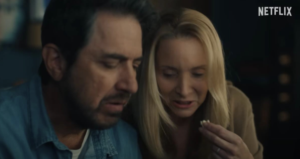 This is a dark comedy mini-series (eight 30-minute episodes in Season 1) starring Ray Romano, Lisa Kudrow, Denis Leary, and Luke Wilson, among others — a strong cast. It pivots around the storyline of three families vying to buy the same house in an upscale LA neighborhood. The series centers on the interactions of the characters, each with challenges going on with their own lives, that they believe the house for sale may help them resolve. But the house holds secrets of its own based on the existing tenants and the back story of their lives. There are a lot of plot twists revealed throughout the series — it’s intriguing and well-acted. I recommend it.
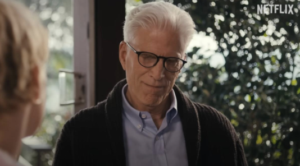 This is a new comedy series focused on a retired professor and widower who finds his calling as an amateur PI when a detective hires him to go undercover inside a San Francisco-based retirement home to help solve a crime. In the process, he becomes an integral member of the community. Ted Danson stars alongside a seasoned cast of veteran character actors. The plot lines are great — well-acted, funny and heartwarming.

For any of you who run your own small business (or even if you are managing a group within a larger organization), what do you do if and when a long-time trusted vendor suddenly goes dark without warning and effectively ‘abandons’ your business? Unfortunately, this happened to me recently; honestly, it was pretty scary and frustrating. Here are some insights and learnings I’d like to share that hopefully will blunt the impact if something similar ever happens to you and your business. Maybe some of this advice is obvious, but as we start a new year it can’t hurt to be mindful.
“Kelli, the power of what you do and how you help those in transition to transform themselves is undeniable, powerful and very much needed. Keep on sharing your gifts with those fortunate to have recognized them.”
Elaine H – Marin, CA
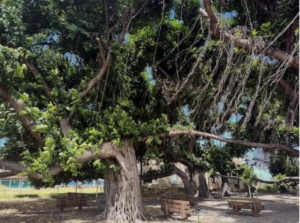
The Lahaina Banyan tree is the largest in the US, and it is the heart and soul of the town. Despite being badly burned, it was spared miraculously in the fires that flattened the town back in August of 2023, and it has been coming back strong since. It’s a sign of hope to all those who are watching its resurgence, and a terrific example of resilience. This is a photo of it from July 2024 (source unknown).
 First of all, what is a thought leader and why does it matter in the business world?
A thought leader often refers to an individual (or sometimes a firm) that is recognized as an authority in their unique business niche and whose expertise is often highly valued and sought out within that business niche.
The reason this matters is that it’s important from a branding and repute standpoint to be stand out as a credible industry expert with rich knowledge and curated opinions of value on select topics to contribute. This allows us as entrepreneurs to stand out, differentiate ourselves in an otherwise crowded marketplace, and to be sought after as experts and authorities with value to offer clients, the media, and our peers. You don’t typically call yourself a thought leader; it’s an acknowledgement that others grant you. Bottom line: someone who rises above the din and is probably worth listening to. …
 Earlier this month the annual Pollstar Live event took place in LA; if you’re not familiar with it, this is the largest gathering of concert industry professionals in the world. It’s a chance for colleagues to come together and exchange best practices, get current on the latest goings-on and network with each other. I’ve been co-producing the annual Awards Show that caps it off for over 15 years. The Keynote at Pollstar Live is typically one of the highlights of the whole event and this year was no exception. It was Shep Gordon (aka “SuperMensch”) and his longest client, Alice Cooper, coming together to share stories about their 48 years of working together. …
Honoring the 48-year “Marriage” of Shep Gordon and Alice CooperRead More »
Celebrity involvement with  brands and commercial enterprises has become so commonplace that there’s even a buzzword for it: “star-ups.”
From Jay Z and Tidal to Jessica Alba and The Honest Company (not to mention Ashton Kutcher and, well, just about everything!), celebrities love working with companies they resonate with.
But that doesn’t mean getting a celebrity on board is easy. Struggling startups, for example, may not be ready. Even well-funded, established companies should have a meaningful reason to partner with celebrities and be able to offer sufficient cash, equity, or something else that’s meaningful and incentivizes them to want to participate. …
From Seinfeld to Bieber: How to Engage the Right Celebrity for Your Business?Read More »
Yo u know that feeling deep in your gut; the one that tells you not to trust the person you’re talking to? Trust it–it almost always has critical information to share with you if you listen.
I’ve had several occasions in my career where my gut told me not to work with someone. But, because I was in need of the work at the time, I ignored it to my peril. It was always a mistake.
I once worked with a startup that had just secured investors–a startup’s dream, of course. Without warning, the CEO completely disappeared; he left the country. He never responded to anyone, and he didn’t pay the consultants or principals what he owed them. He just left and cut off all communication without explanation to anyone involved. …
How to Pay Attention to the Whispers When Vetting a Connection?Read More »
 There are very few people who have worked as successfully across as many industries as Jay Samit has, and he wanted to share that knowledge and help people on their journey. That is why he wrote the bestseller Disrupt You, Master Personal Transformation, Seize Opportunity, and Thrive in the Era of Endless Innovations. Throughout this book, Jay explores the importance of personal disruption. “You really have to say, what is limiting you in this limitless world? My mom had forged my birth certificate and put me in school a year early. I was always the smallest and the scrawniest, therefore I hated sports. As a grown up at 40, I had no interests in sports; followed none; played none; knew nothing about them, because at 4 and 5, I hated it. How silly is that? At 40, I finally disrupted myself and said I will learn to master a sport” Jay writes. …
Jay Samit: Disrupt You, Master Personal Transformation (Part II)Read More »
Jay Samit is the CEO of SeeChange International, a l eading multi-screen video services company. A dynamic entrepreneur, Jay is widely recognized as one of the world’s leading experts on disruption and innovation. Described by Wired Magazine as having the coolest job in the industry, he’s raised hundreds of millions of dollars for startups, sold companies to fortune five hundred firms, and has transformed entire industries. Jay has been an executive at three of the major content companies, as well as couple of leading tech companies. He’s revamped government institutions, and after three decades continues to be at the forefront of global trends. Jay’s list of partners and associates includes the likes of Bill Gates, Steven Spielberg, and Steve Jobs. He is the author of the bestseller Disrupt You, Master Personal Transformation, Seize Opportunity, and Thrive in the Era of Endless Innovations. …
Jay Samit: Disrupt You, Master Personal Transformation (Part I)Read More »
 Gail Zappa recently passed away from cancer. Gail was a unique person, perfectly suited for her role as advocate and champion. She just didn’t hold back. She did not censor herself and went for everything she did with gusto. It’s a huge loss for her family and friends.
Gail, the wife of musician Frank Zappa, was a role model and a tireless champion on behalf of her husband and children for many years and has been a protector of Frank’s estate. She was compassionate, extremely smart and creative advocate and champion, and over time, she became an outspoken advocate for artists to retain their rights and their masters.
…
Op Ed by Kelli Richards
Before Apple Music was ever announced, it had already sparked controversy. Word on the street was that Apple wasn’t just trying to create a killer product — it was going for Spotify’s jugular.
Reports spread quickly of Apple working hard behind the scenes to convince record industry executives to kill the freemium model upon which Spotify has essentially built its audience.
…
Spotify Could Go Away Overnight And No One Would CareRead More »