Confessions of a Lifelong Learner
I was just thinking back on how I spent summers when I was growing up. Yes, there were family trips and as I got older I had summer jobs. But one thing that remained consistent from a very young age was my passion for reading books — I was (and still am) a voracious reader. I still read on average two to three books per month. True confession: I’m a lifelong seeker and learner. I don’t think that will ever change. Periodically I get grief from my close friends about not reading fiction, but there’s so much I want to learn in the real world that I lean non-fiction. I have an unending thirst for knowledge and there’s much I have to learn across a broad range of topics.
I’ve published several books over the years; I was early to the game — but over time, and more frequently, I find several of my peers have been publishing books as well. I share books I’ve read recently from two of them in this issue. Beyond reading, I find myself drawn to taking courses on an active and ongoing basis — whether within my primary career domain as a strategic trusted advisor, in terms of courses I’ve taken as I’ve moved into joining boards, and most recently in the AI realm.
Learning new things keeps your memory and focus sharp, and picking up more knowledge and new skills and insights helps keep you valuable to employers and clients as being at the cutting-edge of yoru profession. You also become a more effective problem solver as you train your brain with diverse topics that help to invoke creative ideas. Curiosity that results in taking on new challenges helps you steer clear of boredom and makes you a more capable and interesting person who can converse on a broad range of topics with anyone, which is invaluable.
What’s your take? Are you a lifelong learner like me? What do you do to sharpen the saw for yourself?
To your success,
Kelli
*Featured article(s):
Video Is AI’s Last Unstructured Frontier: Why the Next Infrastructure Battle Has Already Begun
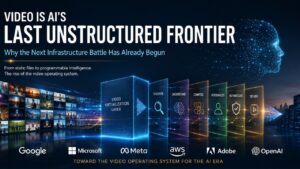
We’ve spent the past 3 ½ years talking about AI models. I believe the next conversation will be about AI infrastructure.
After decades operating at the intersection of Silicon Valley and Hollywood, I’ve learned that the biggest technology shifts aren’t always driven by the most visible applications—they’re often enabled by the foundational layers operating quietly beneath them.
Today, I believe video has become AI’s last unstructured frontier. As AI agents become more capable, hyperscalers invest hundreds of billions in data centers, and enterprises demand personalized, trustworthy media experiences at global scale, a new question emerges: How do we make video itself programmable?
In my latest article, I explore why programmable video may become one of the most important infrastructure opportunities of the AI era, why data-center economics will increasingly matter, and why the next competitive advantage may not come from generating more video—but from making the world’s existing video infinitely more intelligent. Using ION Video as a case study, I examine why a technology that may have been years ahead of its time could now be arriving at precisely the right moment.
Leadership Resonance: A Powerful Leadership Skill That Virtually Nobody Talks About
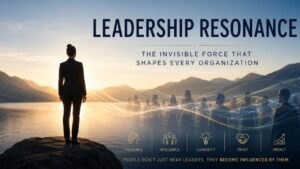
Have you ever walked into a meeting and immediately sensed the energy in the room—before anyone had said a word?
That’s not just intuition. It’s a reminder that leadership is about far more than strategy, communication, or authority. Every leader creates an invisible ripple effect through their presence, behaviors, and emotional state.
In this article, I introduce a concept I call Leadership Resonance—the idea that the most influential leaders don’t simply direct organizations; they shape how people think, collaborate, innovate, and perform by the example they consistently set with their communications, their presence, and their behavior.
Drawing on insights from neuroscience, behavioral psychology, and real-world leadership examples, I explore why the most enduring influence isn’t what leaders say—it’s what others learn simply by watching them and observing coherence.
As AI transforms the future of work, our uniquely human capacity to inspire trust, curiosity, resilience, and courage may become the greatest competitive advantage of all.
*Media Recommendations:
Earth, Wind & Fire (documentary by Questlove)
For those of you who grew up with this band, this documentary will shed some light on things about this band that are likely to surprise you. Yes, the music is timeless and the talent is undeniable. Arguably, Maurice White was a visionary innovator and a genius. What he did in creating EWF was unique and he did it on a grand scale. However, I’m betting few readers (and fans) would know that the band racked up over $500k in debt after most of their tours — or that the band members were paid a dismal wage that made it difficult for them to get by. How could this work over time with 10 or more members in the band, with extravagant costumes, staging and lights. Very few bands of that size have ever been able to make it work financially, let alone over decades (sustainably). There’s a lot more to learn beyond the economics; for those who love the band and their music it’s worth a watch.
Song Sung Blue
This was an interesting film; at its surface, it looks like a film about a Neil Diamond tribute artist. But it’s really a love story about a couple who come together around a shared dream — to create a Neil Diamond “interpretive experience”, and manage to make it work against all odds. It stars Hugh Jackman and Kate Hudson, both of whom turn in powerful performances; I found myself falling into the story and liking it more than I thought I would. Though truth be told, I don’t think I’ve ever seen a film that Focus Features has put out that I didn’t enjoy.
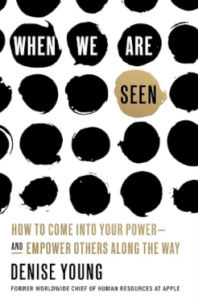 When We Are Seen: How to Come Into Your Power and Empower Others Along the Way
by Denise Young
This book’s author is an Apple alum; she rose through the ranks to become Apple’s chief of HR, the first VP of Inclusion & Diversity, and helped to build and shape the Apple Stores experience from the earliest days. Denise is also a black female leader — a rarity not just at Apple, but across the tech world, then and now. The book is a powerful story of her personal journey in tandem with the insights she gleaned along the line about being overlooked and marginalized as a minority leader. It’s a must-read not only for all tech leaders, but for progressive, growth-minded leaders across all business sectors. We’re well into the 21st century and need to start acting like it.
Digital Self-Defense in an AI World: How to Protect Yourself Online
by Jocelyn King
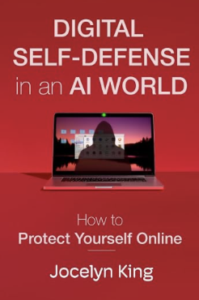 Written by a friend and colleague of mine, Jocelyn King (aka “The Queen of Online Safety”) shares her experience and knowledge of cybersecurity that we would all do well to learn more about in modern times when our personal safety has never been more at risk. The book provides a step-by-step action plan for what you need to do to protect yourself, your family, and your valuable data from the identity theft attacks that have grown increasingly rampant and show no signs of slowing down or going away. Consider this book an insurance policy to make yourself less vulnerable to what might otherwise appear to be random attacks that could create real havoc for you.
*People Say the Nicest Things:
“I have known Kelli for well over 20 years at this point. I consider her to be one of our generation’s greatest and most innovative technology leaders. Kelli is a visionary forward systems thinker who keeps us all motivated with her positive and ethical values and her out-of-the-box ideas. I’m proud to have maintained a healthy long term business relationship with her, and am honored to call her an advisor and a friend.”
Eren Niazi
Early AI Evangelist & Open Source Leader
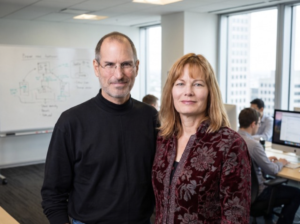
Regular readers are likely aware of my decades-long experience of having had Steve Jobs as a mentor, but I have almost no photos of the two of us together. So a colleague recently created some AI photos of the two of us; here’s one from back in the day. it’s actually a pretty reasonable facsimile.
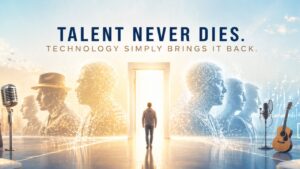


 This past month didn’t just reshape Hollywood.
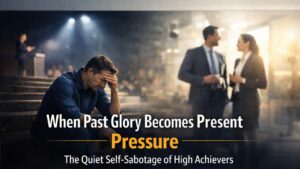
 We live in a culture obsessed with breakthroughs, big wins, viral moments, and overnight successes. But the real advantage is consistency.
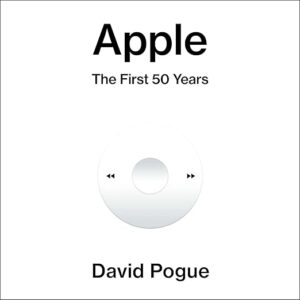 Released just in time for Apple’s 50th birthday (April 1st), Pogue walks the reader through Apple’s storied history. From its origins, to the many management changes, and of course with a spotlight on its many products through the years (some that you know about, and others you probably never heard of) readers will learn more about the tech giant than they probably were aware of. It showcases the innovative product wins in the marketplace and also those that never saw the lght of day. Pogue conducted over 150 interviews with many in fthe Apple universe, and the book is well-researched. Reading through it was a walk down memory lane to be sure. But of course the soul of the company is really only known by us ‘insiders’ who lived through Mr Jobs Wild Ride first-hand. I published my own account of Apple’s culture (& Steve!) through my lens about 15 years ago in “
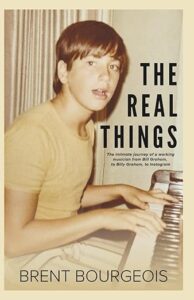 I’m a little biased because I’ve been a fan of Brent as a musician for over 40 years (from the Bourgeois Tagg days). And also because I’ve spent the better portion of my career in the music business coming up at the same time Brent’s career took off – and overlapping with many of the same people; so for me, it was a lot more of a personal (parallel) journey than it might be for other readers. I was looking forward to learning some new things about Brent’s history than I knew in this book, and I was not disappointed. He’s had the great good fortune to have been able to make a living as a musician for many years – doing what he’s been most passionate about – but not without some gaps and stumbles. I’m pleased he was comfortable sharing the good, the bad and the ugly; it demonstrated great vulnerability and humility.

 As we wrap up the holiday season and step back into the work world, the most effective strategy may be to take a page from our holiday pace—and embrace slowing down rather than speeding up. Doing so can better support our nervous systems while optimizing our impact in the process.
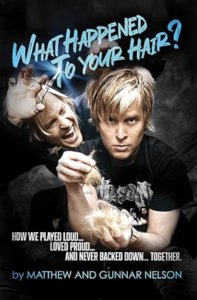 Gunnar and Matthew Nelson are identical twins, sons of the late Ricky Nelson, and chart-topping performers in the early ’90s. Beyond their obvious musical talent, one of their biggest claims to fame is being part of the only family to have #1 records in three successive generations—stemming from a 100-year legacy of entertainers.
 I lost a dear friend just prior to the Holidays in
 When the Platform Buys the studio: Why Netflix-Warner Bros/HBO Changes Everything
 (and Why the Boardroom’s Future Depends on It)
 (Why Visionary Founders, Innovators & Creatives are Wired for Breakthroughs)
 I’ve just started advising Rotem Alaluf, the Founder & CEO of Wand.ai which is the only platform for management, execution, and creation of AI agents as trusted members of your workforce. We should be excited about an agentic workforce not because it replaces humans—but because it liberates human potential at a moment when complexity, speed, and ambiguity exceed what traditional org structures can handle. Enterprises are moving from a purely human-centric model to a new hybrid, dual-workfoce model where AI agents work with people side-by-side, which results in a foundational change in how organizations operate. With this approach, AI models create productivity efficiencies, saving time and money, and minimizing or eliminating redundancies — freeing up people to focus on creativity, judgment, strategy and relationships. This is a structural competitive advantage that compunds over years. We are indeed living in exciting times rich with both innovative breakthrough technologies and emerging business models. Wand is definitely one to watch.

 Cocooning for the Next Level
 I’ve long dabbled with the notion of sitting on paid boards (private and/or public). Recently not one but several trusted colleagues who are on boards urged me to join Athena Alliance. It’s a prestigious community that supports leaders to build impact across the portfolio of their career — whether in the C-Suite, in the boardroom, as investors, advisors, entrepreneurs, thought leaders and more. They host curated live gatherings, virtual webinars, and provide rich educational opportunities for participants to become board ready, to elevate their careers, and to leave their mark in the way that suits them the best.
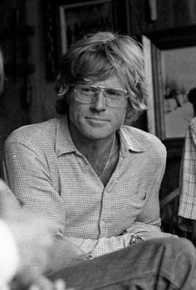 I have loved Robert Redford’s work for over 50 years; I think my first exposure to him was in Butch Cassidy & the Sundance Kid at the theater. His magnetism and charisma was evident even to a young me, and the camaraderie he shared with Paul Newman was electric. I loved how he chose thoughtful roles that allowed him to showcase and portray a rich array of facets of his personality and character — both as an actor and as a director. Then of course taking a stand for independent films by founding the Sundance Film Festival demonstrated his versatility and conviction towards making a difference. Both of us narrowly escaped being passengers on United Airlines Flight 93 on 9-11; I always wanted to have that conversation with him about what the circumstances were for each of us — if we’d had the chance to meet, but alas I never got that opportunity.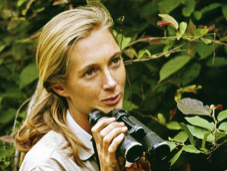
 I have loved Diane Keaton from her earliest roles in The Godfather and Annie Hall, on through to the Father of the Bride films, First Wives Club and Something’s Gotta Give — each time paired with powerful talented co-stars who showcased her unique gifts. She cultivated a persona where it felt like she was someone you would genuinely appreciate as a cherished friend (and I’m guessing her authenticity transcended her acting – like she was that way in real life). She also established herself as a fashion trendsetter (she created basic, timeless looks). She also had design and architectural sensibilities, and became known for renovating and restoring historic homes. She was a true renaissance woman, and her presence will be greatly missed.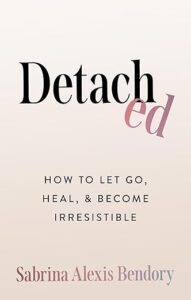

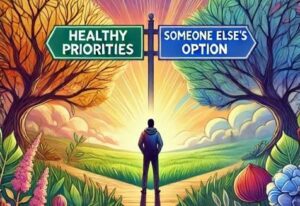 There’s a quiet ache that many leaders, visionaries, and givers carry—often hidden behind accomplishments, outward confidence, and even stoicism. It’s the experience of feeling like an option in other people’s lives, while showing up as a constant in theirs. You won’t always be someone’s first call, first thought, or first choice. And while that might sting, it’s also the wake-up call you didn’t know you needed.Because here’s the truth: You are not here to be someone’s option. You are here to be your own priority.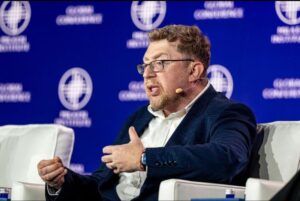
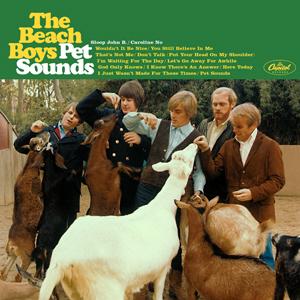 We’ve just lost another musical genius in Brian Wilson — whose legacy is indelible, and whose talents and impact have been compared with Beethoven.
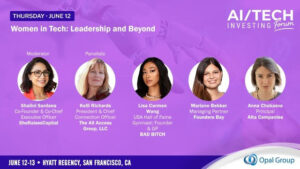

 A message that I share with many of my clients is the need to reinvent ourselves periodically; that includes our self-identity, and also how we position ourselves (our “brand”) in the world.
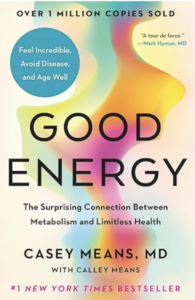 Regular readers of this newsletter know of my passion for optimal wellness, and my own struggles/battles with hormonal and metabolism-related issues for decades. Most of our chronic health conditions can be attributed to our metabolic function and challenges with our immune system as a result. This groundbreaking book pivots on how these issues are a direct result of how well the cells in our body create and use energy. It may be nerdy for some, but the linkages the author connects provide fresh insights and welcome information that helps explain what’s going on — and shares practical tips for how we can better manage the situation.
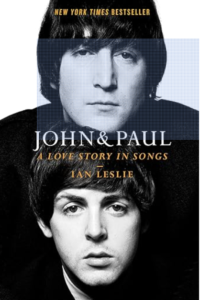 As a Beatleologist for my entire life (since age 8), I’ve amassed a lot of knowledge about the band members, and thought I’d heard and read just about every fact that anyone could. When I heard about this new book, I was curious to see whether I might learn some new facts that I hadn’t been aware of to this point. After all, hasn’t it all been written by this time? What I liked about the book is that it teases out the nuances of the touching and complex relationship between John and Paul since its inception until Lennon’s untimely passing. Paul wasn’t interviewed by the author, so much of it is speculation, but it’s thought-provoking nonetheless.

 As a leader, you are expected to be a source of energy, vision, and inspiration – consistently, always on. Yet, even the most driven leaders encounter moments of apathy—times when the spark dims, the passion wanes, and the weight of responsibilities feels heavier than usual. Here’s how you can break free from apathy and rediscover the energy, creativity, and vitality that spark you up and make you an extraordinary leader.
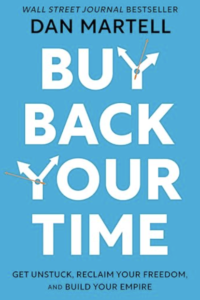 Turns out the real definition of wealth isn’t how much money you have, but how much freedom and control you have over your time! Dan is a successful serial entrepreneur and founder with several exits, and is also a renowned SaaS coach. In this book he shares insights and tips for how fellow entrepreneurs can scale their business and manage their time. He shares a broad range of practical, easy to implement tips across a broad range of situations — with a systems thinking mindset. I particularly enjoyed a couple of the last chapters in the book on dreaming big (as in having a 10X vision), and what he refers to as a “Buyback Life” with approaches like pre-planning your year ahead of time so the important things are addressed.